ARTIST IN RESIDENCE 

SUE WILLIAMSON

 I believe that shifting even one person's thinking a little, means you've done something. 

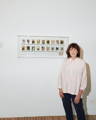
Sue Williamson (b. 1941, Lichfield, UK) is one of South Africa’s most important contemporary artists. Known for her iconic series A Few South Africans (1980s), her work has long addressed issues of memory and social justice. She founded ArtThrob in 1997 and authored two major publications on South African art. Williamson has exhibited globally, with work in collections such as MoMA, Tate, and the Pompidou. In 2025, a major retrospective, There’s something I must tell you, opened at the Iziko South African National Gallery, following institutional exhibitions in 2023 at The Box in Plymouth and The Barnes Foundation in Philadelphia. Recent honours include a 2023 artist-in-residence fellowship at the Yale Center for British Art at Yale University, the South African Department of Sport, Arts and Culture’s Living Legends Award (2020), the University of Johannesburg’s Ellen Kuzwayo Award (2018). Williamson lives and works in Cape Town, South Africa.

Sue Williamson

I started my career as a newspaper reporter in Durban, switched to writing advertising copy here and in New York, and attended life drawing, painting and printmaking classes on the side. I was writing a political column for the Sunday Tribune, doing various things for the Argus, and going to etching and painting classes at the Ruth Prowse School of Art. Then Nedbank offered me a little show — they had a gallery in Sea Point. I did a whole series of etchings inspired by the writer Carlos Castaneda, trying to portray in images some of the things he was writing about in his books.

Then, back in South Africa, in 1976, the youth uprisings in Soweto changed everything.


At a mass meeting of women in the Cape Town City Hall, the Women’s Movement for Peace was formed, a multi-racial organisation. We agreed that we weren’t going to let apartheid keep us apart any longer. Even as white people, we were supposed to get a permit to enter the townships — we refused. We'd go in anyway and make it awkward. We'd sit in restaurants and wait to be told to leave, confront the chief of police, and run protests. At the time, the government was demolishing squatter camps around Cape Town — the Western Cape was a so-called coloured preference area, meaning employers had to hire a coloured person before a black person. That was their justification for clearing the camps, and a few were destroyed.

Modderdam Series

When it was announced in August 1977 that the Modderdam Road camp, near University of Western Cape, was to be demolished, we lined up across the road that morning. The bulldozers sat waiting. Nothing happened. We waited all day — until people had to fetch their kids from school and started leaving. The moment they did, the bulldozers moved in.


We weren't organised enough to hold the line. It took about a week to demolish the entire camp. We went out every day, brought soup, and helped people move their things. I made sketches in my sketchbook.


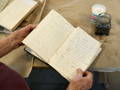
In New York, I had a brilliant drawing teacher called John Groth, who’d been an artist in the Spanish Civil War, working alongside Ernest Hemingway. His emphasis was on the need for us to draw all the time, sitting on the bus, watching television, trying to get the line down as fast as possible. Capture the movement. We had to do 50 sketches every week, that was his instruction. There are some sketchbooks which I hadn’t looked at for years until recently.

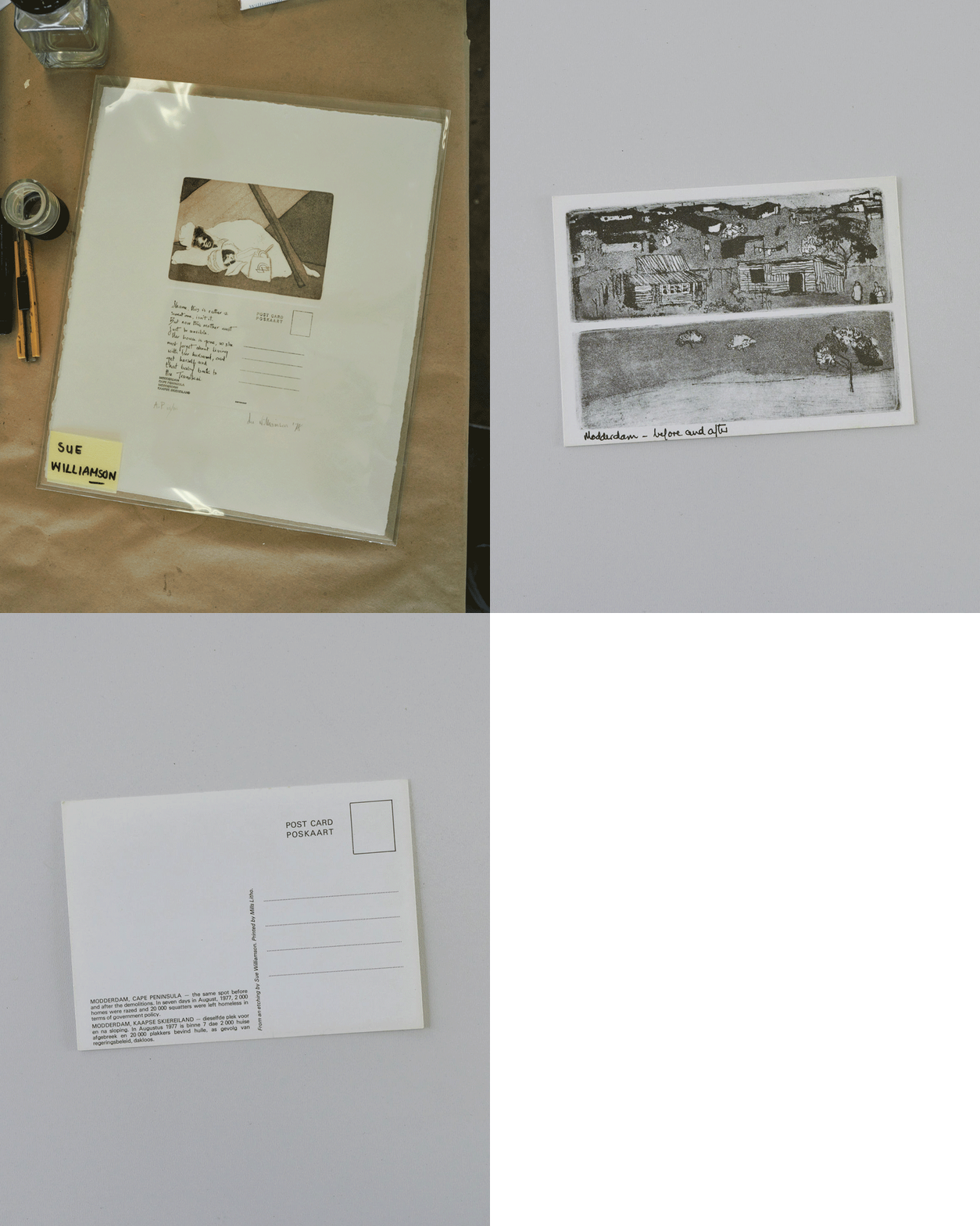
For a long time I didn't know what to do with the sketches. Eventually, I made them into postcards — a series of etchings called the Modderdam Postcards. Small, postcard-sized images: a woman sleeping under corrugated iron with her baby, people's houses burning. Below this I made a plate like an official postcard — Modderdam, Cape Peninsula — and I'd write in the voice of a hard-hearted government official: "This woman — you may feel sorry for her, but she's not supposed to be here. She must leave the area." There were five of them. The series was exhibited in galleries. We turned one of these into a real postcard as a consciousness-raising effort.


In seven days, 2000 homes had been demolished, and that postcard was banned by the government Gazette within that week. It was interesting that, as art, the postcard series had been exhibited in galleries and even shown on TV, but once a real printed postcard had been made from one of them, it was seen as agitprop and thus a threat to the State.


I'd finally found a way to do something. And it felt legitimate, because I'd been there. I'd heard people's stories. I wasn't helicoptering in from the outside. That was really the start.


Gallery work matters, but the majority of people never set foot in one. You need to get things out on the street. I have an activist mindset — I believe that even shifting one person's thinking a little means you've done something. You can't expect to change everything, but all those small, incremental shifts eventually create a different way of thinking. That's why social media has become so important. It's where the influence is now.

Resistance Art in South Africa 

In 1986 I was invited to New York to present a paper at a conference organised by the Women's Caucus for Art, on the role of art in the struggle against apartheid. While I was there, someone wanted to interview me for a book about women artists. We sat in a coffee shop, talked, she took a few photos — and I thought, she’s just done a whole chapter in half an hour. Why don’t I do a book?


I put together a proposal, a publisher in the States picked it up, then pulled out, and I more or less forgot about it. Then one day, while doing illustration work for David Philip Publishers, I mentioned the idea to David. He asked how far I'd got. I said I just had the idea. He said, okay, we'll do it.


That was around 1987, and it took a long time — this was well before the internet. It meant driving around the country, finding artists, and talking to them in their homes. I wanted to show the power of art and how it can change things, which is something I still believe. At the time, there was no book like it.


Resistance Art in South Africa was launched in November 1989, and two months later it was announced that Nelson Mandela was to be released. There had always been talk of it, but we didn't trust the government at all. You just never knew what was going to happen.


It was published simultaneously in the States and in England, but at the time, we had no idea whether it would be banned here. Printing was still done off four sheets of film, and David Philip sent a complete set out of the country, just in case, so it could be printed elsewhere, if necessary. 

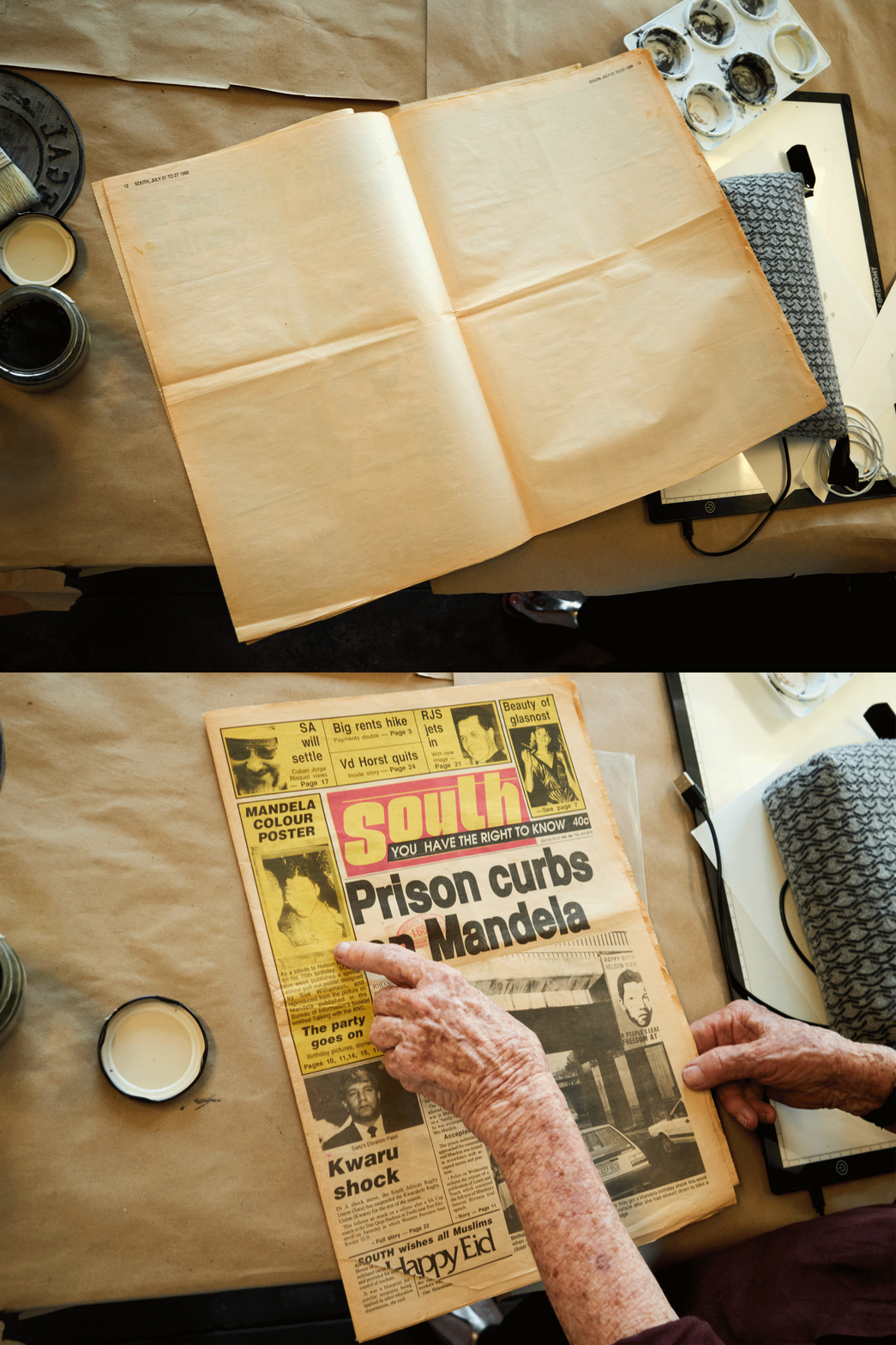
To celebrate the jailed leader’s 70th birthday, South African newspaper commissioned Sue Williamson to design a commemorative portrait of Nelson Mandela as a free pullout for readers. When the paper was published, the poster was announced on the front page, but the centrefold was blank. The printers had been too afraid of the State to print it.

You had to be four steps ahead. Conversations had to be held at the bottom of the garden. It was like a chess game, you were always trying to make moves, speak out and challenge the authorities.


The idea behind ArtThrob was the same — just get information out. I felt we had an exceptional art world here in South Africa, and it deserved to be online. So that's what it was about: international listings, local listings. The web was just starting then — I didn't even have an email address when Internet Africa asked me to write a monthly round-up of South African. And of course, the archive now goes all the way back.

Ephemera and Archives

I like revisiting old bits of writing, earlier work. I like moving on, then looking back to see how things have changed. Or, has it stayed the same? To see the trajectory. What you carry forward. What you’ve dropped. Is it time to do something new around an old concern? All of that interests me a lot. I’m interested in ephemera like postcards, and notebooks, objects which might have not had much significance at the time, but which today give us a new insight into the past.

Krone Artist In Residence

I very much enjoy the process of making art and working with new materials. Sometimes you don’t get what you want out of the process. That’s how it goes. But sometimes the final result is quite unexpected and more interesting than you had anticipated. I'm terribly interested in other artists' processes and what they're doing and how they're using materials.


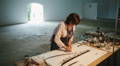
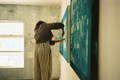
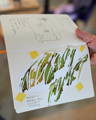
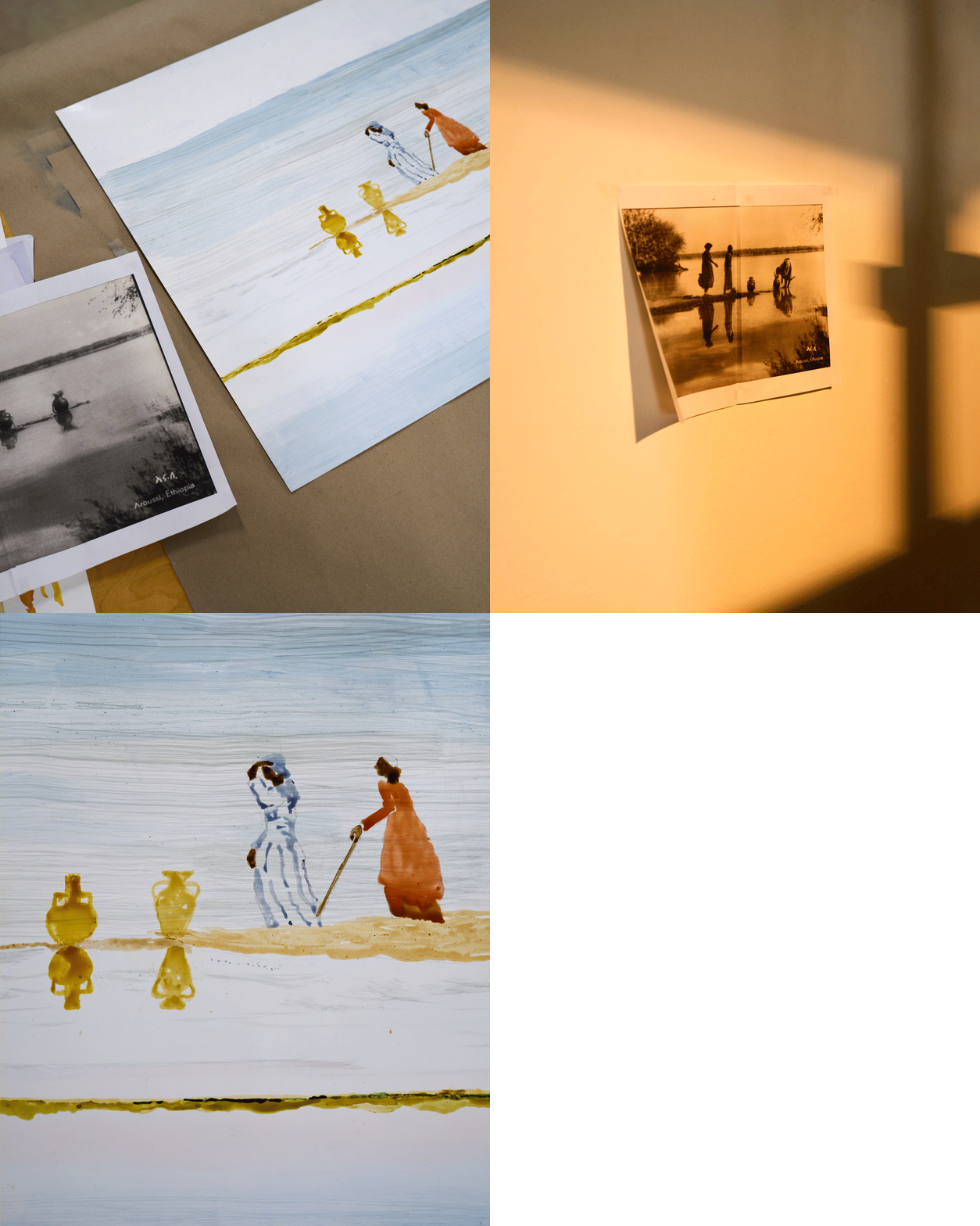
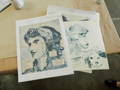
I don't do all that many residencies. I am quite happy in my studio in Cape Town most of the time, with all my things around me. However, the Krone residency gave me the opportunity to take the time to experiment with the materials I had been using for my Postcards from Africa series, Sennelier shellac inks, alcohol inks and powdered graphite.

I did numerous tests on Yupo paper, and I made myself write out exactly what I’d done for each test, step by step. I wouldn’t have had the patience to do that in my own studio. It gave me a pile of references of the way these and other materials interacted with each other, one ink glazing over another, often very organically.


A residency like this also allows you to shift your daily routines. At the end of most days, I would wander down the hill at the back of the studio and look at the sheep. I like looking at sheep. Henry Moore did a whole sketchbook of sheep drawings.

Postcards From Africa

My interest in postcards has always been in their intrinsic function of sharing visual information, an image selected by one person to send to another, usually in another part of the world. By the beginning of the 20th century, the use of photography had become popular, and the sending of postcards was a global craze. Suddenly, people everywhere were able to see photographic images of ‘exotic’ countries such as those in Africa and South America, the kind of images previously seen only in the drawings of travellers and explorers. Missionaries would use photographs to secure funding by reporting on what they had done, sending out images of church services, or schools built.

For colonial photographers, the people they photographed were seldom seen as individuals, but simply as a necessary part of the scene the photographer was pointing his camera at. If you dig, of course, there are millions of bare-breasted women, ethnographic type cards. But I like the ones where people are going around their daily business. From museum collections, books and online sources, I’ve assembled an archive of such images of daily life in colonial Africa, the fishermen, the woman fetching water, a man climbing a tree to harvest coconuts.


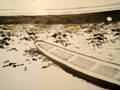
In my drawn reinterpretations of these landscapes, there are signs that the people were once there, the oars are driving the boats forward, or the women fetching water are reflected in the water, though we don’t see them.


I've painted with graphite, trying to reproduce the tonality of the original photograph, and then it is tinted with flat colour. I use a French ink called Sennelier — it has shellac in it, so it's varnished. I work on Yupo paper, which is almost like a plastic, so the ink sits on top and you get these beautiful glazed effects. Then I use alcohol-based inks which have such an incredible flow, and the most beautiful colour names: lettuce, willow, butterscotch, denim, aubergine.

The Diaries of Lady Anne B

I’m interested in documentation and archives. What people say, and what they choose to write about. Allowing us to see the world through their eyes.


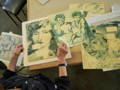
Lady Anne Barnard was the wife of the first British Colonial Secretary to govern the Cape when the British took over from the Dutch. She arrived in 1797, and during her five year stay, kept diaries full of her daily experiences. I think she's almost like Jane Austen — she's so witty in the way she writes about the other women and the way they gossip.Some of these lively entries led to me to make a series of monoprints titled: The Diaries of Lady Anne B. 


The English is a little bit archaic, but Lady Anne Barnard writes about leaving a plate of cold beef tongues out in the kitchen for the cook to prepare for supper, but he had ignored them, and the dogs ate them all.


It's really a mixture of the violent and the mundane. She talks of her irritation at the hangman who, without warning her, decided to hang someone right outside her dining room window. She finishes by saying she normally would have felt sorry for the man, but he killed somebody for the sake of six shillings, so she thought he'd deserved what he got.

Another entry describes a visit to a mother with a charming baby. Lady Anne, now in her forties, reflects, “I wish it had been my own, but one must not wish for anything now so improbable”. She was ten years older than the man she married. She may have lived 200 years ago, but her open and honest reactions to her rather different daily life in colonial times make her totally relatable today.


Lady Anne arrived in Cape Town in 1797, and the Krone farm was established in 1701. So Twee Jonge Gezellen was here even before she was. She travelled around the Western Cape with her watercolours and paint, so it’s possible she visited. I don’t know.

District Six: Museum Case #9, Nile Street

How do we remember past civilizations and communities? Partly by the objects that are left behind, fragments of buildings, broken glass, shards of household crockery, once in daily use. Such as objects found at the British Museum — china, Roman glass, and things from previous civilisations. Little pieces which seem banal, but are all that is left of the community that once existed but is no more.

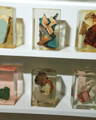
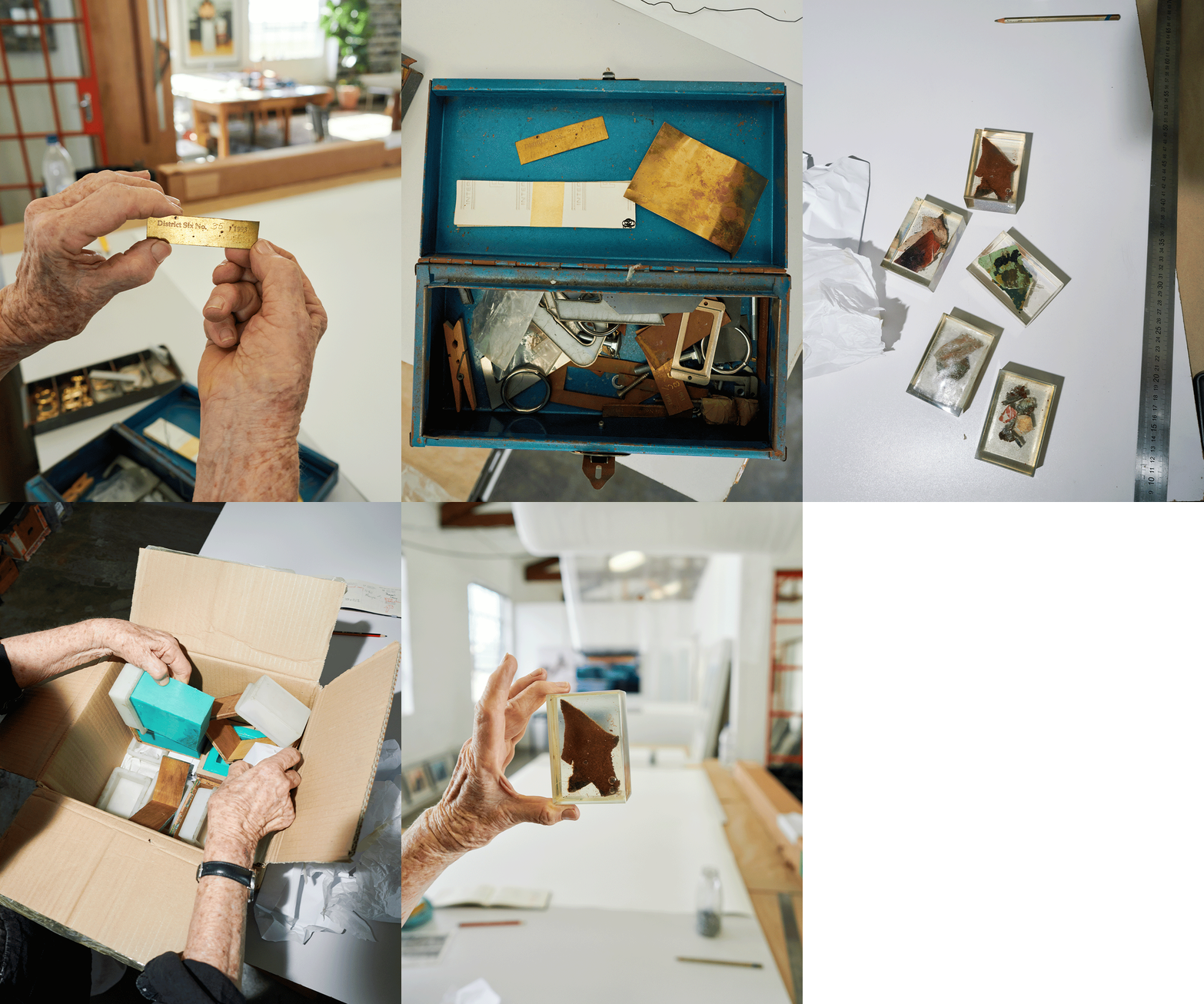
The pieces encased in resin blocks in District Six: Museum Case #9, Nile Street, refer to a specific street in District Six. The demolition of the area began in 1968, and by 1982, was almost complete. In 1993, I went back, to see if anything remained on the grassy slopes. I found there was still so much just below the surface, I think a review referred to me as Cape Town's very own bag lady. These scraps are not very important in themselves… lumps of plaster, a strip of shower curtain, a piece of bathroom tile.


But knowing that these very humble and ordinary objects are all that is left of District Six gives them resonance. They deserve to be preserved.


In a way, I am playing the role of a museum archaeologist, though an archaeologist would never have encased the scraps in resin … but I have done this so each can float in its block, and then the blocks themselves have been placed on shelves in a classic museum case.


Those little chips of blue and white china might have dated from VOC (Dutch East India Company) days, or simply come from china bought at the SPAR. There are no value judgements. Each fragment is equally important because it came from District Six.

There is something I must tell you

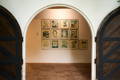
For me, the best moment of a new exhibition is that moment when your work is all around you in the space, but nobody’s come in yet. It’s hung. It’s properly lit. You can look at each piece in relation to the whole and in relation to the space, and it’s almost separate from you. For better or for worse, it has taken on its own life.


After the retrospective exhibition at Iziko, there is a sense of closure. Fifty years of work, recorded in detail in the catalogue in photographs and texts. I can now do something entirely unexpected if I wish. It doesn’t have to relate to what I’ve done before. But it might. Exciting.

Find out more about the KRONE X WITW Artist Residency Programme here

 PhotoGRAPHY AND VIDEOGRAPHY:

Jonathan Kope


CREATIVE DIRECTION:

HOICK

This website uses cookies. By continuing
to use it you accept our use of cookies.