ARTIST IN RESIDENCE: CATHY ABRAHAM

ARTIST IN RESIDENCE 

CATHY ABRAHAM

“The making of the work is the witnessing of the transformation of meaning. My story, in a way, is not the only story. It’s just a material.

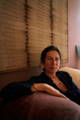
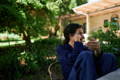
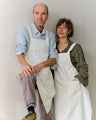
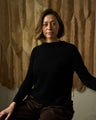
Cathy Abraham (b. 1968; Cape Town, South Africa) is an abstract multi-media artist whose practice encompasses the mediums of film, installation, painting, sculpture, and mixed media. Abraham attended the Michaelis School of Fine Arts, University of Cape Town (UCT), where she graduated with a Master’s in Fine Art with Distinction in 2018. Her work is included in the IZIKO South African National Gallery Collection, the Rupert Collection, the Spier Art Collection in South Africa as well as the Kilbourne collection in South Africa. 


“My practice is deeply rooted in repetition as a material prayer. Invoking transformation and healing, these prayers address past sufferings that continue to haunt the present. Appearing as shadows in the overlapping ‘ghosts’ of colliding brushstrokes, such hauntings give form to otherwise formless traumas, the apparitions tracing the wound in its residue. My unfolding engagement with numbers and ritual action is meditative and devotional, a means of transcending the self towards an understanding of the interconnected, miraculous nature of all beings.”   Cathy Abraham, 2025


Central to Abraham’s practice is her ritual approach to counting forms, wherein she primarily focuses on the numbers 5, 9, 11, 13, 18, and multiples thereof as a systematic gesture toward ecologies of survival. Abraham “counts brush marks as a form of meditation, allowing the mark of the brush to leave a visual trace as ghosts do.” Rhythm and repetition is further expressed in Abraham’s use of Gematria, an alpha numeric system within the teachings of the Kabbalah, that aids Abraham in her process. Additional themes addressed in Abraham’s work include the environment, changeable ecologies, interconnectedness, intergenerational trauma, cause and effect, movement, time, and space.


Abraham held her first solo exhibition Naked in 2008 with Joao Ferreira Gallery in Cape Town, followed by other solo presentations, including Undying Entanglement, a body of work comprised of film, installation, and paper works exhibited at the South African Jewish Museum in Cape Town in 2013. In 2025 Abraham presented A Sacred Matter, at Everard Read, Franschoek, South Africa and in London. Further solo presentations include: A Shifted Season, presented by Untitled at FNB Art Joburg, Johannesburg, South Africa in 2024; The Fallen Sparks of Tohu, with IBI Art at Contemporary Istanbul, Turkey; Yielding to the Shadow, with IBI Art at the Investec Cape Town Art Fair, South Africa, both in 2023; 22 Pathways at Everard Read, Cape Town, South Africa in 2022; Spaces: The Abyss of Deep Time, at The Fourth, Cape Town, South Africa in 2021; A Deeper Kind of Nothing and The Monument at Glen Carlou, Franschoek, South African in 2019.


Selected group exhibitions include Investec Cape Town Art Fair with Locus Projects (2025); RMB Latitudes presented by RESERVOIR, Johannesburg, South Africa (2024); What I feel when I think about the cosmos (2023) at Everard Read Franschoek, South Africa; Seduction (2022) at Everard Read, Cape Town, South Africa; The Great South African Nude, at Everard Read, Johannesburg; Conversations with Irma (2019) at Irma Stern Museum, Cape Town, South Africa and Domestic Departures at The Forge, Cape Town (2011)
On art as healing

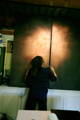
There are particular narratives or stories that when they repeat their presence, I find quite debilitating. When I started with the brushstrokes, it was a very visceral feeling. It’s a very physical response to those things. And when I started painting in this way, it would come out in front of my eyes, it would just come out of my body. Like, bleeding out, you know. It’s life lived that brings you to the place where you can make a decision to use a number with a brush. Ultimately, these are simple choices that I’m running with that I have a very strong response to. When I do the big paintings that you can stand in front of, for me, it’s like a mirror. It’s like a portrait, because it’s all there, but it’s more than there because it’s not there anymore. It can now exist as something else, and that is very compelling. So the making of the work for me is very much witnessing the changeability, that transformation of meaning. But my story, in a way, is not the only story. It can be just a material. 

On ritual

When you look at the word ritual, it conjures up meditation, but I see it very much as a daily survival, daily practice. I have found in my life that I do the same thing over and over. A lot of what we do in life falls into the category of the mundane. If seen in another way, this can lead to depression and feeling discarded or diminished, or it’s like the unseen thing. The thing you do over and over again, like washing the dishes, the laundry, the domestic things, the being up at night with children, it’s the relentlessness of survival. How do you wake up every day and make it magical and meaningful?


I accept that I can’t exist only in this studio world. I set my practice so that it allows for disturbance. With a certain number of strokes, and say, five lines in a moment, I can accommodate the inevitable disruptions of life. I’m not separate from living. Instead of fighting what I’m living, I’m just layering everything into the living.


Over the years, I’ve structured systems that are repetitive, that mirror repetitive ways of living, that have to be layered. You have to be multiple things at once as a person. Each task has to allow for disruption and allow for other things to happen. You have to be exponential as a person, so I’ve developed a practice in my work that mirrors that, and that's what I call ritual.

On human connection

One of my biggest questions is how we connect as humans. We’re connected through trauma, but we’re also connected through what we face and how we live, through ecology. The idea of that there’s this impending doom and the threat of resources running out… I use the pen until the pen runs out. I use the paint to a certain count, so you see the change in tone as the ink runs out.

On mark making

I call the brush marks in the paintings ‘ghosts’, because they work like ghosts, coming and going in different intensities. Ghosts of trauma, memory, collective memory and ecological concerns. This thing that we can’t really see… what this would look like, how you make that solid, make it have weight. Give it a shape and a presence, because it’s felt, but never seen.


The sound of the brush mark being painted is something I think about a lot. I hear it all the time. You know this, this sort of rasping sound, this brush to the count. And you can hear and see when there’s a breath taken between counting.

On breath

Breathing is a repetitive act. Sometimes we’re conscious of it. Sometimes we’re not. Breathing is a very big focus for me, because I’ve struggled with breathing my whole life. As a child, I was told that asthma was nothing. It was just psychosomatic. So with psychosomatics, that nothing can make you unable to live, then surely it can also make you able to heal?


I’ve worked with the idea of nothing being something, being the space where something once was. That is how I like to look at the idea of nothing, or the word nothing. A hollow in a space, like an eggshell.

On the Gematriah of Kabbalah

I work with numbers and with repetition. I use numbers that are from a system that is within Kabbalah Gematria, an alphanumeric system.


It has to say eight on the brush, because eight is the number of the miracle and the supernatural. And I believe we have to be super natural, super human, to be human. So then I’m holding on to my size eight brushes.


Then number five. I will do five lines in a painting, it’ll be five lines at a time, left to right, right to left. Five is also a transformation number. It’s linking the physical and the divine, the physical and the metaphysical through the five levels to the soul. The number 13 leads to 26 because it's two thirteens, two ways to love. Also 26 is two and six, which is eight.


There are 22 pathways between all of the ten Sefirot, from the tree of life and the emanations.


So each time I’m going into something through colour or through connection of one Sefirot to another. Then I learn more about how to love. There two ways to love, apparently, the one is in the blues, which is loving kindness and lovely things, a really wonderful way of loving. And then there’s Gevurah, which is in the reds, and that is discipline and strength and but too much of one or the other goes into the dark side. So there has to be a balance between the two. And then there’s compassion, and the Tiferet in the middle, which is green and purple. And it’s all so very, very, very precise, it just shows you how powerful every little thing is.


In quantum entanglement, you have an atom or connection that is here in this world, and also part of another world or another universe. Whatever is happening here to this one is happening to that one. For me, that connects to a Kabbalistic thought, and the five levels of the soul. A soul can give rise to an infinite number of souls, like you lighting a candle. You can light many flames from one candle.

“Someone once said to me that when you leave the studio at the end of the day, you don’t know whether you’re going to be back tomorrow, and that whatever you’ve left are your last words. It’s quite a responsibility.”

On seeing error as beauty

I’ve no preconceptions of what the drawing is going to be. I’ve just followed the few rules that I’ve made up front. I follow the errors in my hand. When I was five or six in school, starting to learn to write, we had these lined books, and you’d learn to write in the books. Every time I went over the line, I was smacked on my fingers with a ruler or a pen. I find it amusing that I’ve landed up doing what I do, to follow the mistake all the way. In the end, it’s there and the rest of the drawing hinges on error.


What if our intention is to have perfection, but also see the error as beautiful? That’s why I’m in the art realm and not another realm.

On The Artist’s Responsibility

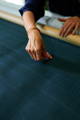
All objects have energy. And if the end of an artwork is an object, it will still go on and vibrate. It’s got pigment in it, which is very powerful. There is fabric, then there is the making—the marks that are made in it, which have their own presence. It’s a big responsibility to make an artwork. I feel I’ve had to take full responsibility of the size of the brush, the number of strokes, the size of the landscape of the canvas, and how the shapes will unfold in the numbers. I feel very responsible for what I’m doing and who’s going to see and how it’s going to be seen through colour, through number, through time. I have to arrive at it with the right intention. There’s a devotion, there’s a respect and reverence because I know that it’s a big responsibility.


I don’t practice in a conforming way, like how religion is practiced. It’s a practice linked to my belief in art and the power of art. It must be practiced in that way that holds the thing that you’re doing with care.

On The Krone Residency Experience

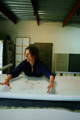
When I got there, I didn’t have much stuff, and I realised what it must feel like to be the drop in the ocean. Both part of the oceanic state of being and nothing at all. You know, someone once said to me that you know when you leave the studio at the end of the day, you don’t know whether you’re going to be back tomorrow, and that whatever you’ve left are your last words. It’s quite a responsibility.


I haven’t been alone with myself for such an extended period for over 30 years. I could, for example, finish a whole thought, or even remember where it originated and trail along with it, without having to remember all the threads. Alone like that, I got into a stream of being in myself, like a pathway. I was alone with the stuff going deeper and deeper, with the paint, the saturation, the layers. I concertinaed inwards.

On the horizon

Investec Cape Town Art Fair with WhatIfTheWorld gallery, as well as a solo at the gallery, which opens 9 April 2026. Later in the year, my work will be featured in a solo booth at the Armory show in New York. 

Find out more about the KRONE X WITW Artist Residency Programme here

 PhotoGRAPHY


 cathy’s STUDIO:

Jonathan Kope


CREATIVE DIRECTION:

HOICK


This website uses cookies. By continuing
to use it you accept our use of cookies.